Winter Maintenance In Urban Areas - Survey Methodology And Key Results
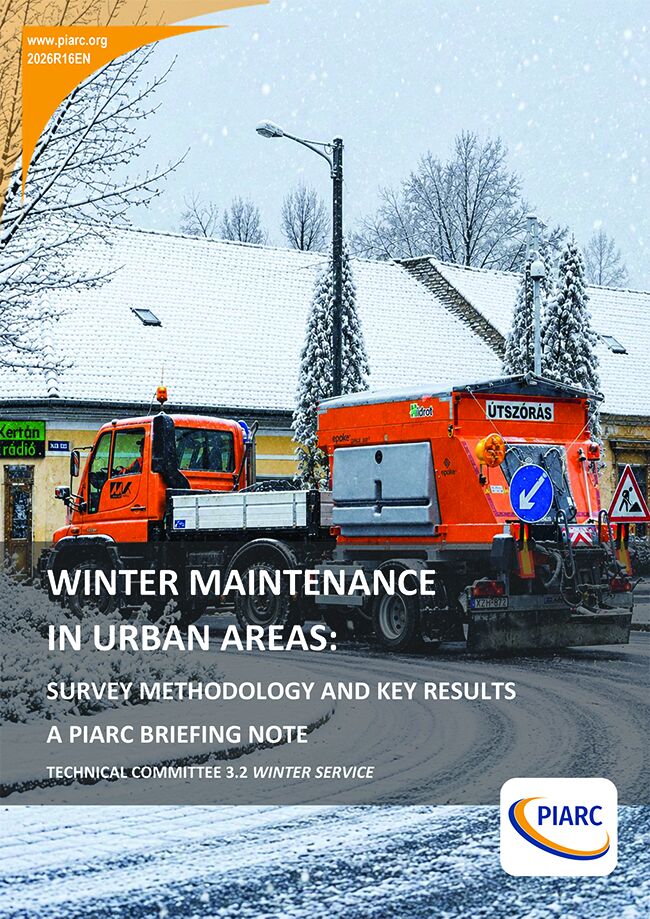
This study presents the initial findings of an international survey conducted by PIARC TC 3.2 Winter Service WG3.2.5 Winter Maintenance in Urban Areas. The survey focuses on pedestrian zones, cycling infrastructure, and micromobility networks, reflecting the increasing importance of vulnerable road users in urban mobility.
Based on more than 80 responses from approximately 30 countries, the results show wide variation in geographical conditions, organisational approaches, and operational practices. Winter maintenance systems are strongly shaped by local climate, topography, and institutional frameworks. Analysis indicates that the number of days with sub-zero temperatures has a stronger and more consistent correlation with the duration of winter service periods than snowfall alone.
Decision-making is typically centralised and primarily based on weather and road condition data. Sodium chloride remains the most commonly used material, while the adoption of advanced techniques, such as pre-wetted salt, differs significantly between cities. Specialised technologies, including heated surfaces, are limited to specific contexts.
Communication practices rely mainly on digital channels and are closely linked to weather forecasts, while real-time operational transparency remains less common. The findings highlight opportunities to improve efficiency, sustainability, and safety through better data use, clearer prioritisation of vulnerable users, and wider adoption of innovative solutions.
Information sheet
- Date: 2026
- Author(s): Comité technique / Technical Committee / Comité Técnico 2024-2027 3.2 Viabilité hivernale / Winter Service / Vialidad Invernal / Climate Change and Resilience of Road Networks / Cambio climático y resiliencia de la red de carreteras
- Domain(s): Winter Service
- Type: 2026R16EN - Survey Methodology And Key Results
- PIARC Ref.: 2026R16EN
- ISBN: 978-2-84060-873-8
- Number of pages: 27